Influencer marketing and SEO: Building lasting visibility

Written by Emily Jenkins
Published on January 27, 2026
Reading time 11 minutes

Table of Contents
Influencers drive the conversations that shape what people search for next.
Their content surfaces in search results and strengthens the authority signals that lift organic rankings. Yet many teams still treat influencer marketing and SEO like they’re speaking different languages.
In reality, when you connect the two strategies, your brand shows up everywhere your audience is looking, including traditional, AI-driven and social media search.
This guide explores how influencer marketing fuels SEO and how to use them together to maximize your brand’s long-term visibility.
Influencer marketing and its impact on SEO in 2026
Influencer marketing drives discoverability across every channel.
When creators start conversations, their posts generate search demand and brand mentions that strengthen your site’s credibility.
And when high-authority creators repeatedly mention your brand alongside target keywords (like “Sprout Social’s social media analytics tools”), industry leaders believe Google’s entity graph begins associating your brand with that topic. This indirectly boosts SEO authority signals for your brand.
Influencer and SEO strategies are no longer parallel efforts—they’re interdependent engines. When they work together, each amplifies the other. This turns creator reach into organic visibility.
Here’s how linking your influencer marketing and search engine optimization strategies creates a continuous loop of discovery, engagement and growth:
Influencer activity creates SEO authority signals
Influencer content sparks activity that search engines pick up on.
While Google can’t see private engagement inside TikTok or Instagram, it does notice the results that come from influencer marketing: more people searching for your brand on Google, more visits to your website and more sites linking to your pages.
Imagine a creator posts content about an eco-friendly deodorant on Instagram, like this promo for Wild by Emilie Mathieu:

(Source: Instagram)
After seeing this post, some of Emilie Mathieu’s followers look up the brand on Google and visit its website, driving search demand.
Then, a sustainability blogger who follows that creator posts a rundown of “The Best Natural Deodorants” and includes a link to the product page, like in this article by More Than Greens:

(Source: More Than Greens)
That blog link creates a backlink—a key signal that can strengthen the brand’s authority and help it rank higher in Google search results.
Backlinks are like other websites vouching for you. When credible sites link to your pages, it tells Google your brand is trustworthy and relevant in its field. That trust, powered by E-E-A-T signals (experience, expertise, authoritativeness and trustworthiness), helps your site rise in search rankings.
In this way, influencers don’t just extend your social reach. They also turn social trust into credibility signals that power SEO growth.
Influencers bridge social and traditional search
The best influencers create content around phrases people are actually searching for and optimize it using keywords in titles, captions and hashtags. This brings their content to the top of in-app searches, making their social media posts easier to find.
From there, how visibility grows depends on the network. On YouTube, for example, engagement metrics—such as likes, comments and watch time—help videos rise in YouTube search. Because YouTube is part of Google’s ecosystem, those engagement signals also push the content higher in Google’s search engine results pages (SERPs).
On Instagram, TikTok and other closed networks, optimization and engagement increase visibility in social search feeds. Since Google can’t see in-app metrics, it uses public metadata like captions, hashtags and context to understand and rank the content.
When an influencer’s post ranks high in social search, it inspires audience action. People often turn to Google to learn more, creating a ripple effect: more searches, more backlinks and more clicks that build SEO authority.
That’s how influencers bridge social and traditional search. Optimization drives discovery everywhere, while engagement fuels in-app reach. Together, they improve brand visibility and turn awareness into measurable growth.
Influencers drive discovery in social search
Social media platforms have become powerful search engines for product discovery. According to the 2025 Sprout Social Index™, consumers head to social media channels to research products one to six months before making a purchase.
Influencers fit into this by introducing users to products they’ve never seen before, which sparks curiosity and prompts further searches.
Picture this: Someone types “gifts for anglers” into TikTok. A creator’s review of your brand’s leather tackle bag ranks near the top. The viewer watches, saves the post and starts digging deeper. This time, they search for your brand name and similar terms like “sustainable fishing gear” and “leather tackle bags.” Each new search deepens their interest and exposes them to even more creators and products.
When this happens across thousands of viewers, your brand and category gain organic search traffic. That growing search volume signals that your products are relevant and in demand. Later, when people search for terms like “best fishing gifts,” “eco tackle bags” or “gifts for fishing enthusiasts,” they find creators mentioning your brand. That’s when you truly start dominating discovery.
Discovery doesn’t come from guessing what people search for. It happens by knowing what they already search for. Social listening tools identify trending keywords and questions in real time. Knowing those terms lets you brief your influencers to create and optimize content around them, which helps turn everyday searches into powerful moments of discovery.
Creators help your brand capture long-tail keyword searches
Social media influencers who understand search intent mirror what people search for and optimize their content with those terms.
Imagine a creator reviewing your sustainable yoga mat. They focus on phrases audiences already search, like “best eco yoga mats,” “non-slip mats for home workouts” and “top 10 cork yoga mats.” To reach those searchers, they build these terms into their video titles, captions and hashtags.
You then monitor which creator phrases perform best and repurpose them across your own content by adding them to social posts, blogs and product pages. This helps your brand rank higher for long-tail keywords on Google so you stay visible long after the campaign ends.
Evergreen influencer content compounds authority
The most valuable influencer collaborations produce evergreen content that drives results long after publication.
Evergreen content is the opposite of trend-driven posts. Trend content rides a moment, like a viral dance or a trending hashtag, but it disappears when attention moves on. Evergreen content stays useful and searchable because it answers questions or solves problems that don’t change over time.
Think about it like this: Because you sell oven cleaning products, you join a TikTok dance trend by having a creator use your products to clean their oven mid-routine. Your post is a fun way to engage for a week, but once the trend fades, so does the visibility.
Now, imagine this same creator posts a YouTube tutorial on “the best oven cleaning hacks ever,” like this video by Pro Housekeepers:

(Source: YouTube)
Since there will always be ovens that need cleaning, people will continue to search for information on this topic. Because the video answers a real question and continues attracting views, Google will index it for years to come.
8 best practices for connecting influencer marketing and SEO
Influencer marketing and SEO work best when they feed into each other. Influencers encourage engagement and discovery, while SEO turns that attention into lasting visibility. To make the most of both, bridge your creative campaigns with data-driven optimization.
Here are eight ways to use influencer activity to boost search performance:
1. Align influencer content with high-value keywords
High-value keywords are phrases that your ideal customers search for with strong interest or buying intent, such as “best cruelty-free moisturizer” or “eco-friendly gym gear.”
When influencers use these terms naturally in their posts, their content becomes more discoverable.
Use social listening to discover trending questions and phrases related to your products. Share those insights with creators so they can weave them into captions, titles and scripts, boosting visibility and engagement.
2. Leverage multiple formats for cross-channel search reach
Different content formats show up in different searches. When influencers repurpose content across platforms, such as posting a YouTube Short on TikTok or sharing a Facebook carousel on LinkedIn, they expand your visibility in search results everywhere.
This extends beyond social search. For example, video reviews often show up in Google’s video results or Featured Snippets, while carousels, infographics and blog collaborations gain visibility in Images, organic results and Google News.
Encourage creators to repurpose content and experiment with formats. The more variety they use, the more search surfaces your brand appears on.
3. Track brand mentions and backlinks
Influencer content often travels far beyond social. For example, digital magazines quote creators’ YouTube reviews, and bloggers regularly link to Instagram posts in product roundups. Each of those mentions creates a backlink that strengthens SEO authority.
Track off-platform mentions to understand where your campaigns deliver real SEO value. These insights allow you to refine future partnerships and focus investment on content that gets more visibility.
4. Use analytics to connect engagement to SEO signals
Google can’t track engagement on closed platforms, but likes, shares and comments still matter. They ignite curiosity that drives people to search, click and spend time on your site, which boosts your ranking.
Dig into what drives engagement in the first place. Tools like Sprout Premium Analytics (paid add-on) help you connect social engagement spikes to referral traffic and broader SEO metrics from your other tools. These insights show how social resonance fuels search demand to help you plan content that drives discovery.
5. Collaborate on evergreen, search-friendly content
Trend-led influencer content fades fast, while evergreen content keeps performing. That’s because tutorials, reviews and “how-to” guides answer questions that never go out of style.
A YouTube video on “how to clean hiking boots,” for instance, can keep driving traffic for years after a campaign ends. Planning creator content around ongoing, everyday challenges instead of short-term trends creates discoverable, linkable and consistently valuable content that builds authority over time.
Dig into engagement data to find posts your target audience keeps coming back to. This will help you identify which evergreen topics will attract long-term interest.
6. Amplify influencer content across owned and earned channels
Don’t keep influencer content locked in the creator’s feed. Repurpose it across your own channels to extend its reach, lifespan and impact.
Sharing influencer content in your social posts, newsletters, blogs and press features exposes it to new audiences and reinforces consistent messaging across every touchpoint.
It also creates new chances for people to gain awareness of your content, where they may decide to reference, link to or embed your content. Remember, this is valuable for possibly producing high-quality backlinks and mentions that signal authority to Google and AI engines.
7. Optimize influencer partnerships for topical authority and E-E-A-T
Not all creators boost SEO equally. The difference comes down to who already holds authority in search. When you partner with influencers who rank in Explore pages, YouTube search or Google results, you tap into their credibility to leverage your own.
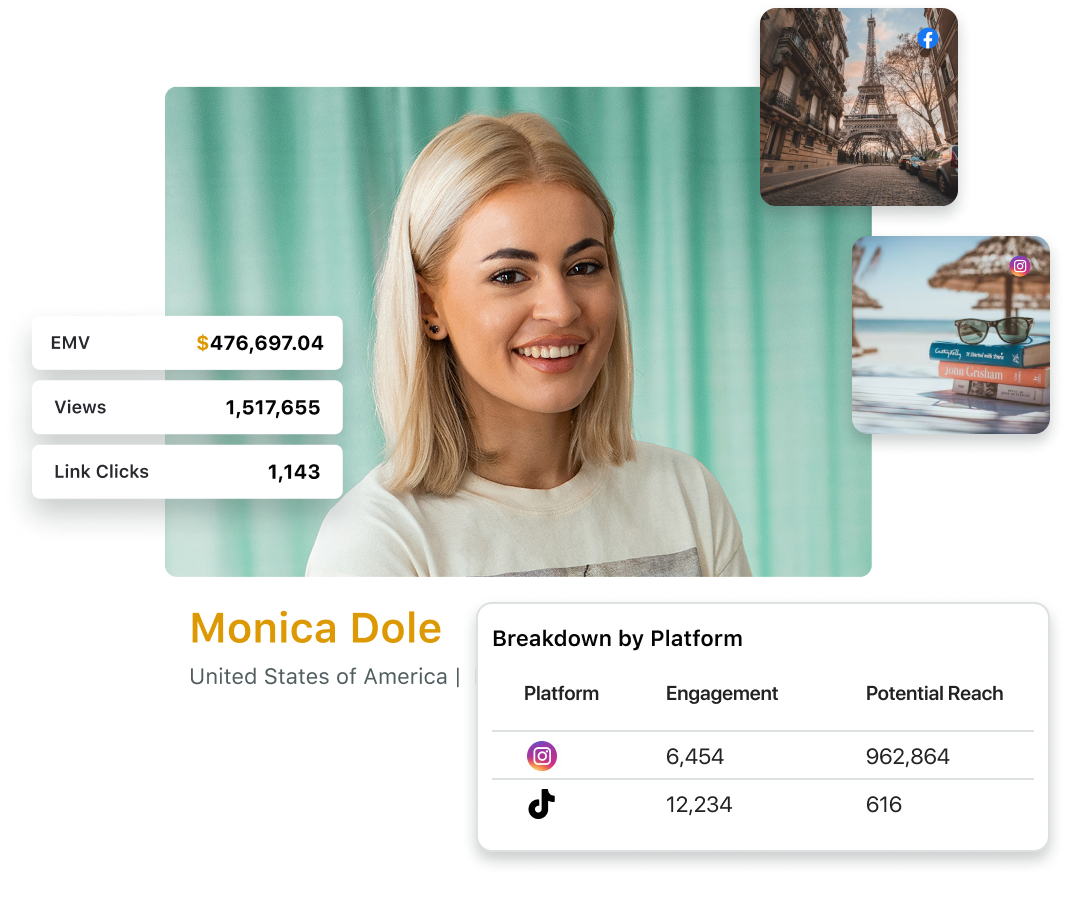
Use tools like Sprout’s Influencer Marketing platform to consolidate metrics like engagement rate, content performance and audience demographics in one place. This helps you identify creators who align with your brand and generate real results, ultimately strengthening your credibility and visibility on social networks and search engines.
Get a free Sprout Influencer Marketing demo
8. Measure ROI across both social and search ecosystems
To understand the true value of your influencers, you need to measure how their interactions translate into long-term visibility and impact. That means tracking the real ROI of influencer marketing.
Look beyond social metrics and connect engagement to SEO outcomes, such as backlinks, keyword rankings and referral traffic.
Analytics dashboards that combine social engagement data—spikes in reach, impressions and clicks—with traffic and conversion metrics from web analytics reveal which content drives impact.
Layering in keyword and backlink data from your SEO tools shows exactly how influencer-driven engagement contributes to higher rankings and measurable ROI.
Tips for creating an SEO-aligned influencer marketing campaign
SEO and influencer marketing form a reinforcing cycle. Engaging content from trusted creators drives new searches and interactions, while SEO ensures that visibility continues over time, keeping both the content and its creators easy to find. The more you connect the two, the stronger both become.
Here are some tips to maximize the benefits of influencer marketing campaigns by aligning them with your SEO strategies:
Select creators strategically
Seek out creators who already rank well in search and reach the audience you want to attract. When they mention or link to your brand, the trust they’ve established transfers because backlinks from high-authority sites carry more weight in search engine rankings.
But don’t just rely on one type of content creator. Mix it up by partnering with bloggers for contextual links, YouTubers for video visibility and short-form creators for in-app discovery. This variety builds backlink diversity and strengthens your authority across multiple channels.
Craft an SEO-specific campaign brief
When influencers understand your SEO goals, their content can actively strengthen your search performance. That’s why it helps to include SEO direction alongside creative guidance in every campaign brief.
Outline focus keywords, anchor text and target URLs so creators know exactly where to link and how. These links, from YouTube descriptions, blogs or social posts, help search engines connect influencer content with your site. If the creator can provide do-follow links, even better—those pass on extra SEO value.
Don’t forget to clarify content rights upfront so you can later repurpose influencer assets across your own channels. Reusing this content on your website reinforces consistent messaging while contributing to your owned SEO strategy.
Repurpose content regularly
Don’t let influencer content fade after posting. Instead, try turning high-performing videos into blog posts, embedding short-form clips into how-to articles or creating carousels out of infographics. Likewise, convert your top-ranking blogs into scripts for creators.
This constant cross-pollination keeps your brand visible wherever audiences search for it.
Create assets just for influencer campaigns
Generic content disappears quickly because it doesn’t add value or feel personal to an influencer’s audience. However, custom, co-branded assets do both by blending your brand’s message with the creator’s voice, making the content more engaging and memorable.
Let’s say you’re a tour operator partnering with a travel influencer. Instead of sending them a generic booking page, you create a “Backpacking Essentials” landing page featuring the influencer’s top packing tips, your travel advice and several tour itineraries.
The landing page feels relevant to the influencer’s audience and naturally ties your expertise to their content. When they share the page across social and link to it on their blog, it drives traffic, shares and backlinks, all while giving you clean conversion data through tracked URLs.
How to measure success across influencer marketing and SEO
To prove impact, you need to connect what happens on social to what happens in search—and, ultimately, to business results. Social engagement alone doesn’t tell the full story. The real value comes from understanding how influencer-driven awareness translates into discoverability, traffic and conversions over time.
These three KPI categories reveal how each stage of your influencer marketing and SEO efforts contributes to measurable ROI:
Platform-level KPIs
Tracking reach, engagement and impressions reveals how far your influencer content travels and how audiences respond. These metrics show how visible your content is and how well it resonates across social channels.
SEO-aligned KPIs
Monitoring backlinks, referral traffic, keyword rankings and SERP visibility highlights how much influencer content boosts organic search performance and long-term discoverability.
Business impact KPIs
Measuring conversion rates, assisted revenue and pipeline influence connects influencer and SEO efforts directly to ROI.
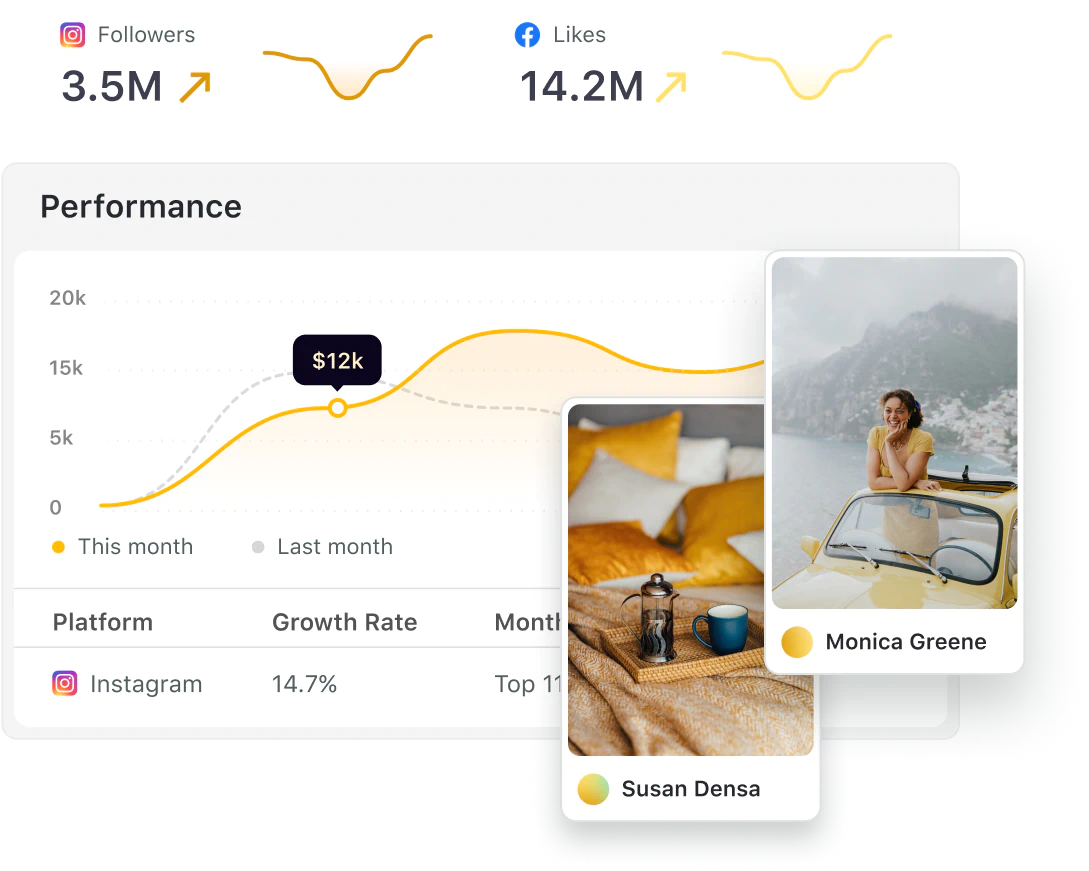
Bringing these metrics together in one view by combining analytics platforms with influencer marketing reports reveals exactly how social engagement fuels search visibility and drives business growth.
Put influencer marketing and SEO into practice for growth
Effective influencer marketing builds lasting visibility, authority and ROI. Connecting influencer activity with SEO turns every post, mention and backlink into compounding growth. Social signals drive discovery, while search visibility builds credibility, creating a loop that strengthens your brand across channels.
Managing that connection isn’t easy. Tracking creator performance, keywords and backlinks across tools makes measurement difficult. Sprout’s Influencer Marketing platform brings insights together, identifying creators, aligning high-quality content with SEO goals and measuring total impact in one place.
Ready to unify social and search? Request a demo today.
FAQs about influencer marketing and SEO
How does influencer marketing affect SEO?
Influencer marketing boosts SEO by driving brand mentions, backlinks and search demand. Audience engagement with influencer content sparks curiosity, which leads social users to search for your brand, visit your site and share your content. These actions signal credibility to Google, which improves your site’s domain authority and visibility.
Can influencers help improve Google rankings?
Yes, though indirectly. Influencers spark engagement and create credible content that others share and reference, generating backlinks and branded searches. These signals tell Google your content is trustworthy, gradually improving rankings.
What types of influencer content support SEO best?
Evergreen formats like tutorials, reviews, listicles and “how-to” videos perform best for SEO because they continue attracting searches long after a campaign ends. Their lasting relevance helps drive consistent organic traffic, backlinks and visibility.
How do you measure ROI from influencer marketing and SEO together?
To measure influencer marketing ROI, look at social and SEO performance together. Social metrics like reach and engagement show how audiences interact with influencer content, while SEO metrics such as referral traffic, keyword rankings and conversions reveal how that activity translates into visibility and business impact. Tracking both provides a complete view of how influencer engagement fuels discoverability, credibility and measurable growth.
39 free social media strategy templates that will elevate your workflows
Published on August 20, 2026 Reading time 15 minutes



Share