How to find TikTok influencers who drive real ROI

Written by Olivia Carr
Published on December 11, 2025
Reading time 11 minutes

Table of Contents
TikTok’s influence on purchase behavior is undeniable, but finding the right creators to partner with is often complex. Influencer marketing can deliver real business impact, but only if your TikTok partnerships are strategic, brand-aligned and measurable. The challenges are real: Fake followers, market saturation and unclear ROI can make it difficult to know where to start.
Below, you’ll learn how to find TikTok influencers who drive results and scale your influencer marketing efforts efficiently.
How to start a TikTok influencer marketing strategy
Before you start shortlisting creators, it’s important to zoom out and lay the groundwork.
Today, influencer marketing isn’t just a way to “get seen” on TikTok. Instead, it’s how brands earn cultural relevance. This is an essential step toward reaching your audience. In fact, the 2025 Sprout Social Index™ found that 93% of consumers say it’s important for brands to keep up with online culture.
But staying relevant requires strategy, not speed, which is why you should root your TikTok influencer approach in business goals, audience insights and your broader social media plan. This ensures that every partnership drives measurable impact rather than fleeting engagement.
Download our Influencer Marketing Toolkit
Here’s how to create an effective strategy for your business:
Define your TikTok influencer marketing goals
Your goals determine which TikTok creators are worth the investment and how you’ll measure success.
For example, if your goal is brand awareness, you should prioritize creators with consistently high reach and video completion rates. But if you’re driving conversions or TikTok Shop sales, engagement quality and niche relevance should outweigh follower counts, which makes micro influencers great partners to consider.
To set meaningful campaign KPIs, though, you’ll need to align your metrics with each of these funnel stages:
- Awareness: Impressions, reach and video completion rate
- Engagement: Likes, comments, shares and saves
- Conversion: Click-through rate (CTR), affiliate link clicks and attributed sales
Setting these goals up front gives you a clear benchmark for success and a data-driven filter for who’s worth contacting.
Get clear on your audience
A creator’s follower count is only a vanity metric if their audience doesn’t reflect your ideal customer. That’s why you should go beyond demographics to psychographics—what your audience believes, values and aspires to. (For example, are they motivated by wellness, sustainability or financial empowerment?) These signals often predict long-term alignment better than surface-level metrics do.
Decide where influencers fit into your broader social strategy
Influencer marketing is a powerful lever within a larger social strategy. That’s why the best TikTok partnerships don’t live in isolation. Instead, they seamlessly weave your brand’s core narrative throughout influencer content. For example, if a creator’s TikTok video drives upper-funnel buzz, you can later repurpose it on Instagram Reels or in paid campaigns. The key is to ensure that creators enhance what you’re already doing, not duplicate or distract from it.
To gain the most impact from influencer partnerships, you should ask yourself how a creator can support your existing goals. Here are a few examples:
- Product launch: Can they build authentic buzz for a new product drop?
- Content gaps: Can they create high-quality, authentic videos that fill your social media content calendar?
- Paid strategy: Can you repurpose their content as a high-performing ad to lend credibility to your paid campaigns?
Determine influencer collaboration and compensation
Before reaching out to creators, you’ll need to decide what kind of partnership best aligns with your goals and budget. One-off collaborations, for instance, can offer quick reach, but long-term partnerships compound on the higher engagement and ROI that influencer content consistently delivers. And according to the Sprout Social Influencer Marketing report, 92% of marketers say influencer content performs better than organic in terms of reach, while 83% say it nets more conversions.
When mapping out your budget, be sure to consider not just audience size but also content quality, creator reputation and category expertise. Sprout’s Influencer Marketing report also shows that almost half of creators charge anywhere from $250–$1,000 per post, but 71% offer discounts to brands for multi-post collaborations. But beyond saving money, if you work with only a few select influencers, you’ll save time and strengthen your campaign continuity in the long-term.
Finally, formalize every detail in a clear influencer contract, including timelines, usage rights, deliverables and payment terms. Doing so protects both parties and ensures a stronger alignment, which allows creators to produce their best work.
3 ways to find the best TikTok influencers for your brand
Most brands use several different discovery methods to discover relevant creators. For instance, supplementing TikTok’s built-in options with influencer marketing tools helps you fully assess an influencer’s audience quality, historical performance and brand fit.
But while these are helpful starting points, they also come with blind spots.
Here’s a closer look at the top three TikTok influencer discovery methods and how to get the most out of each:
1. Search the TikTok Creator Marketplace
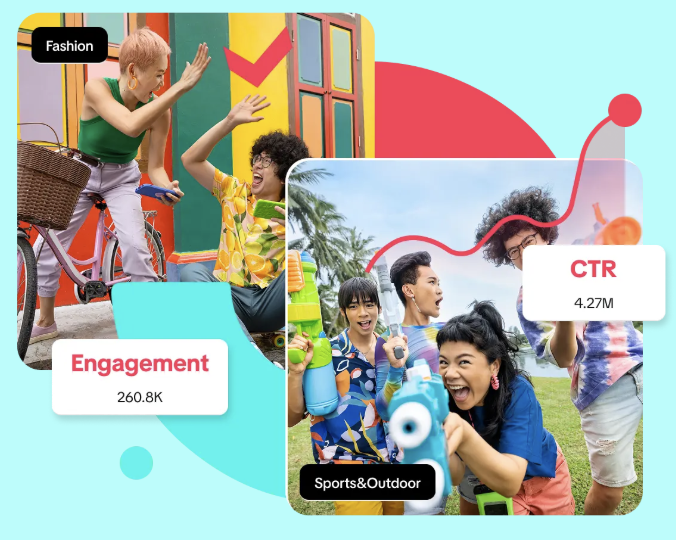
TikTok’s Creator Marketplace is the network’s official influencer search and collaboration hub. It’s a strong starting point for identifying creators by follower count, audience demographics and engagement rate, but it’s not comprehensive. TikTok itself notes that participation is optional, which means millions of creators (especially niche micro and nano influencers) will never appear there.
For example, if you’re building an omnichannel social campaign that focuses on niche communities like #SkinTok or #BookTok, many of the most authentic creators in those spaces won’t show up in the Marketplace.
Still, you can use this tool to identify verified, high-performing creators and explore how TikTok categorizes content trends. Then, validate your findings with a third-party platform that analyzes follower authenticity, sentiment and cross-network influence (data that the Creator Marketplace doesn’t reveal).
Source: TikTok
2. Conduct a manual TikTok search
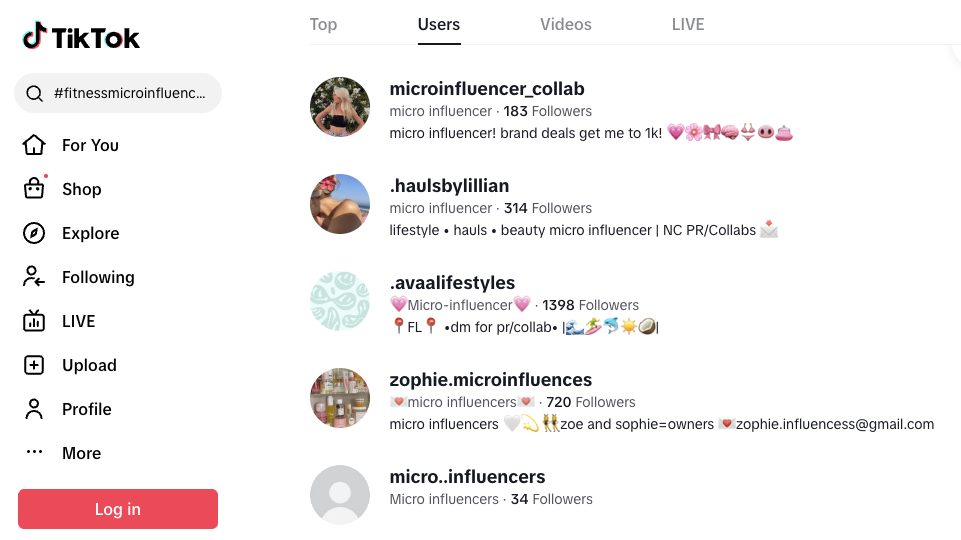
Manual search is still one of the most insightful ways to understand a community’s core. That’s because browsing hashtags like #WellnessTok or #WhatIEatInADay reveals the tone, visual style and community conversations that shape your category.
Performing this hands-on exploration will help you identify emerging creators and cultural microtrends before they hit formal databases.
Source: TikTok
The downside? This method is fairly time-intensive. Plus, TikTok’s algorithm favors virality, not necessarily long-term brand alignment. A creator who has millions of views on a trending sound, for example, may attract an audience that’s completely outside your customer base, which won’t benefit you as much in the end.
To work around this issue, use manual search to humanize your understanding of the space, then validate creator data with automated tools that show performance consistency, engagement authenticity and audience overlap.
For example, a wellness brand could explore the following hashtags:
- #GutHealth
- #FitnessTips
- #WhatIEatInADay
- #WellnessTok
- #FitnessMicroinfluencer
You can also use TikTok’s search bar or browse the Discover tab to surface videos that match your brand’s aesthetic and values. From there, you can explore creators’ profiles and note metrics like how often they post, their tone of voice and storytelling style, the quality of their comments sections and their views and shares over time.
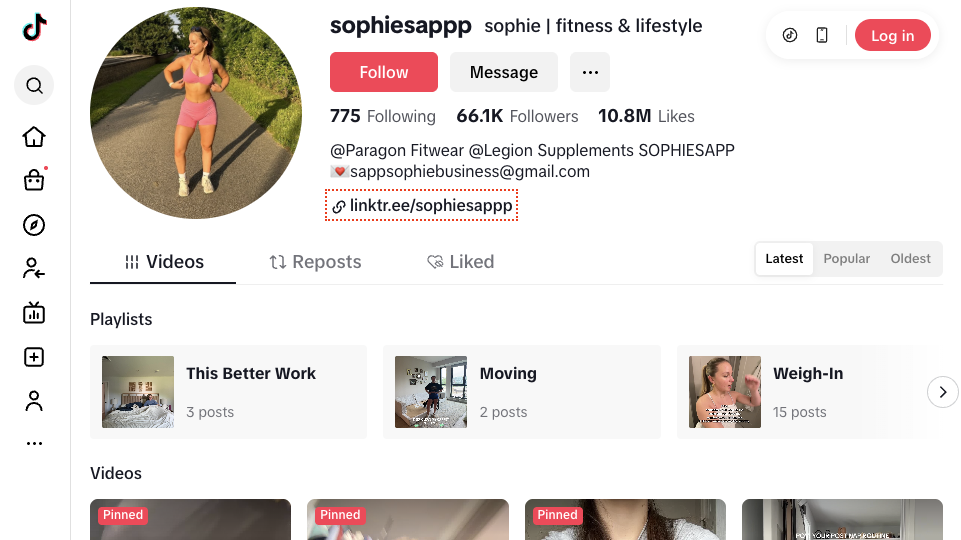
When searching under hashtags, brands can also hunt for macro, micro and nano-influencers (like fitness creator Sophie Sapp, whose account appears under the hashtag #fitnessmicroinfluencers).
Source: TikTok
Be sure to look in the comments of viral videos too. Communities often tag creators they love, which will help you find TikTok micro influencers who have smaller followings but extremely loyal audiences. These creators often fly under the radar but drive higher engagement and conversions for niche products.
The takeaway: While manual search is effective for early-stage research, most brands benefit from pairing manual search with automated discovery tools to save time and scale more efficiently.
3. Use an influencer management platform
Influencer management platforms extend your visibility beyond what native TikTok tools can provide. They do so by centralizing influencer profiles across multiple social networks, which helps you filter creators by location, niche, engagement rate and key audience attributes.
The best influencer marketing platforms, however, also combine social listening data, AI-based audience analysis and brand safety signals to surface creators who truly align with your voice and values. For example, the Sprout Influencer Marketing platform allows you to use AI-powered search to find contextually relevant influencers, as well as assess demographics, engagement rates, brand fit via Brand Fit Score and past partnerships.
This saves you hours of manual vetting and reduces the risk of misaligned partnerships, which is a growing concern. In fact, 49% of consumers say they make monthly purchases because they’ve seen creator content, according to Sprout’s 2025 Influencer Marketing report.
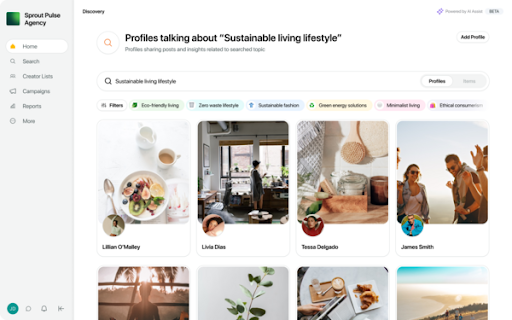
This kind of precision helps you move quickly while reducing guesswork. That way, you’ll find the right TikTok influencers for your goals, target audience and brand identity.
Find and vet TikTok influencers faster with Sprout Social Influencer Marketing
TikTok moves faster than almost any other social network—new creators on the platform rise and fade in a matter of days. Because of this, relying on manual searches means you’ll always be trying to catch up. This hinders the 59% of marketers who are planning to work with more creators this year and adds to the common bottleneck of finding and vetting influencers, according to Sprout’s Influencer Marketing report.
Sprout Social Influencer Marketing (formerly Tagger) eliminates this friction point by combining creator discovery, vetting and ROI tracking into one platform so you can scale authentic, data-backed partnerships without sacrificing speed or accuracy.
Here’s how it works:
Build better creator shortlists
Finding TikTok creators who align with your brand used to mean hours of scrolling, comparing profiles and patching together data from native apps or spreadsheets. But Sprout Influencer Marketing streamlines this entire process.
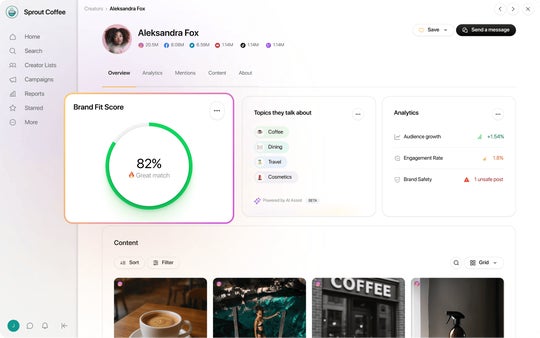
Its AI-powered discovery surfaces creators who match your audience, values and content themes across TikTok, Instagram, YouTube and more. You can also filter by metrics like engagement rate, audience demographics, location and Brand Fit Score, all in one place.
This precision means less time searching and more time strategizing. No matter who you’re searching for, Sprout lets you build a hyper-relevant shortlist in minutes, not hours.
Vet TikTok influencers before you reach out
Even popular creators can have inflated or misaligned audiences. That’s why Sprout goes deeper than vanity metrics when it comes to vetting influencers.
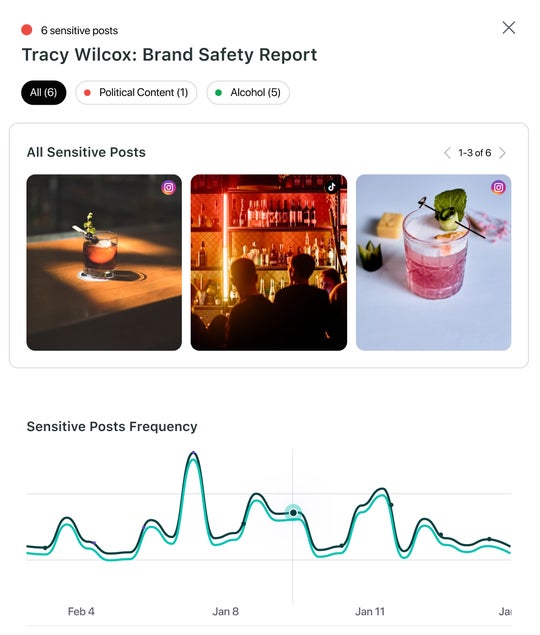
The platform’s authenticity and Brand Safety signals flag audience anomalies, past brand mentions and engagement health in real time. You’ll also see each creator’s Brand Fit Score, an AI-driven metric that analyzes topical alignment, audience interest match and audience location.
That way, instead of guessing whether a creator is a good match, you can confidently move forward knowing that their content, community and values align with your goals.
Manage cross-platform campaigns and measure true ROI
Since your customers move fluidly between social networks, your influencer programs should too.
Sprout makes it easy to manage creators, briefs, approvals and performance across TikTok, Instagram, YouTube and other platforms in one unified workspace. This end-to-end influencer campaign management isn’t just for efficiency, though. It also enables you to connect every campaign directly to business value.
The Sprout Influencer Marketing platform’s built-in reporting tools help you accomplish the following:
- Track TikTok post performance and audience engagement
- Measure campaign reach, impressions and click-throughs
- Compare ROI across creators, content types and networks
- Create shareable reports that show stakeholder value
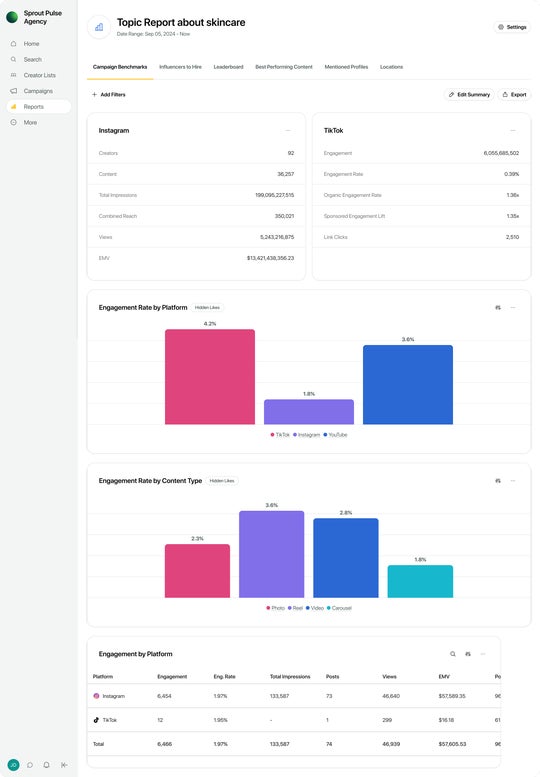
By consolidating multi-channel metrics, Sprout provides a holistic view of campaign impact. This means you’ll close the loop between creator investment and marketing results and gain a clearer understanding of which creators drive the most value across your ecosystem.
Sprout also makes cross-network creator management seamless with features for the following efforts:
- Comparing performance across creators and networks
- Coordinating campaigns across channels without extra admin work
- Building consistent messaging and branding across campaigns
For teams that work across regions, clients or business units, these features help you scale faster by providing consistent visibility and control.
How to build long-term TikTok creator partnerships
One-off campaigns create reach, but long-term partnerships create trust.
In an era where consumers scroll past sponsored posts, consistency is what converts attention into influence. According to Sprout’s 2025 Influencer Marketing report, 47% of consumers want influencer content to feel genuine, even if it’s sponsored. Ongoing influencer relationships deliver even more authentic content, stronger audience trust and smoother campaign execution over time.
Here’s how to build continuity and relationships that drive real ROI:
Step 1: Choose creators who reflect your brand’s values
The best partnerships start with shared purpose, not short-term promotion. Sprout’s 2025 Influencer Marketing report also shows that 61% of creators want to work with brands that align with their own values.
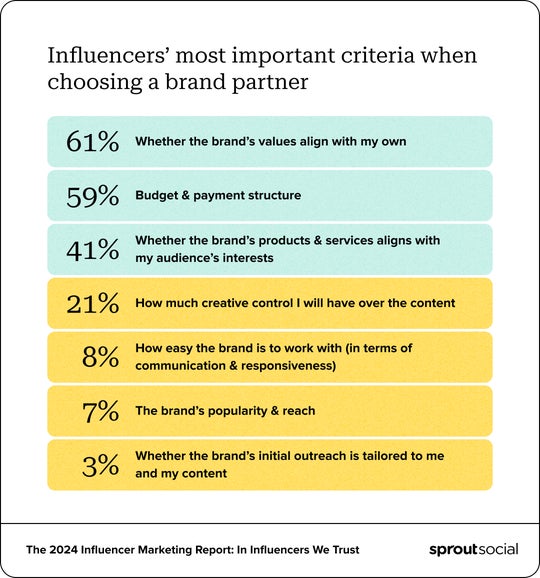
This means that your first conversation should center around mutual alignment, not deliverables. For instance, does the creator’s tone, community and content philosophy complement your brand voice? Does your brand give the creator the creative freedom they value?
To assess this alignment early, look at Brand Fit Scores, past collaboration history and sentiment data in Sprout Influencer Marketing. This data ensures that you’re building relationships based on data-backed authenticity rather than assumptions.
Step 2: Set expectations with clarity and creative respect
Even strong partnerships can break down without structure, which is why you need a detailed creator brief. This document sets the foundation for success by clearly defining this information:
- Campaign goals and content themes
- Deliverables, usage rights and timelines
- Approval workflows and KPIs
Sprout Influencer Marketing simplifies these collaborations with its integrated campaign management tools. They allow you to track deadlines, performance metrics and even content approvals in one place without messy spreadsheets or email threads.
Step 3: Measure, share and optimize together
Long-term partnerships thrive on mutual visibility, which is why sharing performance data with creators builds trust and helps them refine their approach. This involves sharing results with your creators and letting them know how their content performed and where it added value. This level of insight and transparency builds trust and a genuine working relationship, which makes influencers that much more likely to say yes to your next campaign.
With Sprout Influencer Marketing, you can close this feedback loop effortlessly while simultaneously gaining insight into which creators are worth working with long-term. To do this, look beyond vanity metrics and focus on these indicators of real impact:
- Engagement rate: To calculate this rate, divide the influencer’s total interactions (likes, comments and shares) by their follower count. An average TikTok engagement rate is around 5.7%, but micro influencers often exceed that.
- Content retention: If people are saving or sharing videos, it means the content is educational, entertaining or valuable enough to revisit. These are strong intent signals that you shouldn’t ignore.
- Brand lift and conversions: Using affiliate links, discount codes or TikTok Shop data lets you gauge how creator content drives business outcomes.
- Consistency: To gauge consistency in a creator’s content, compare their organic and sponsored post performance. If their audience interacts authentically with both, that’s a sign of strong brand alignment.
- Audience sentiment: Monitoring comments and mentions allows you to understand how the creator’s followers perceive your brand and partnership. Positive sentiment here signals long-term potential for the partnership.
These insights empower both brands and creators to iterate and improve together.
Find relevant influencers who drive real results on TikTok
TikTok’s energy is fast-moving, but even so, your influencer marketing doesn’t have to feel like guesswork. The brands that win are those that treat creators as long-term partners and use data to fuel smarter decisions.
This is where the Sprout Influencer Marketing platform supports you end-to-end, from discovery and vetting to campaign management and ROI analysis. With AI-powered search and comprehensive performance tracking, you’ll gain the clarity and confidence you need to build influencer programs that scale and prove their business value.
Ready to turn your TikTok influencer partnerships into measurable growth? Schedule a demo today to learn how Sprout’s Influencer Marketing platform will help you connect the dots between creator collaborations and real ROI.
FAQs on How to Find TikTok Influencers
How do I search for creators on TikTok?
You can search directly in the TikTok app using relevant hashtags (e.g., #WellnessTok, #FitnessMicroinfluencer), browse your For You page to see who is trending or check the comment sections of popular videos.
For a more formal approach, you can use the TikTok Creator Marketplace to filter verified creators or use a tool like Sprout Social Influencer Marketing to find influencers relevant to your brand and audience.
How do I contact TikTok influencers?
Most creators list a business email in their TikTok bio or on their linked Instagram profile. If they are part of the TikTok Creator Marketplace, you can contact them through that platform.
What is the TikTok Creator Discovery tool?
This generally refers to the TikTok Creator Marketplace. It’s TikTok’s official platform that allows brands to search for and collaborate with registered creators based on filters like follower count, audience demographics, and location.
How can I verify the engagement rate of an account?
You can calculate it manually:
(Likes + Comments + Shares) / Follower Count * 100.
Do this for the last 5-10 videos to get an average. An influencer marketing platform like Sprout Social Influencer Marketing automatically calculates true engagement rates and vets for audience authenticity.
What are the best tools to find TikTok influencers?
The best tools go beyond simple discovery. While TikTok’s Creator Marketplace is a good start, dedicated influencer marketing platforms like Sprout Social Influencer Marketing provide a comprehensive solution. They allow you to find creators across multiple platforms, vet them for brand safety and audience authenticity, manage campaigns and track ROI all in one place.
37 free social media strategy templates that will elevate your workflows
Published on December 5, 2025 Reading time 15 minutes






Share