39 free social media strategy templates that will elevate your workflows
Published on August 20, 2026
Reading time 15 minutes
Doomscrolling is the habit of spending excessive time scrolling through negative online content—especially news—leaving you sad, anxious or angry. It’s a habit you can break.
With 5.66 billion social media user identities worldwide, social media is a major source of news. The Reuters Institute’s Digital News Report 2026 found social media and video networks are the top way people access online news (54% across 48 markets).
Social media connects us, but it also creates traps. One of the most common is doomscrolling.
Doomscrolling happens on news sites and social media platforms, and many people don’t notice they’re doing it.
The term spread during the COVID-19 pandemic in 2020, and Merriam-Webster added “doomscroll” to its dictionary in September 2023.
Social media can bring its own pressure, too. A 2025 Pew Research Center survey found 31% of US teens say social media makes them feel pressure to post popular content. In the same survey, 27% say it makes them feel worse about their own life.
A 2026 review of 44 studies in Frontiers in Psychology linked doomscrolling to higher anxiety, depression and psychological distress, though research shows association, not cause.
According to the Mental Health Foundation’s 2025 guidance, doomscrolling often starts with wanting to understand a topic and feel prepared. It also says people may doomscroll to feel in control. There’s so much in this world that one can’t control, but when and why they acquire knowledge is one such thing that’s controllable.
People believe the more educated they are, the better prepared they’ll be for dire situations. What they don’t recognize is the cost to their mood. In randomized experiments published in PLOS ONE in 2021, two to four minutes of COVID-19 news on social media lowered participants’ positive mood.
The Mental Health Foundation recommends limiting doomscrolling to protect your mood. You can take control and break the habit. Here are steps to help you disconnect.
Brands shape what people see in their feeds. The Sprout Social Q1 2026 Pulse Survey shows how consumers are adjusting.
The survey found 21% of consumers say reducing screen time for their mental health is the goal shaping their social media habits this year. It also found 66% feel more selective about the content they engage with than a year ago. Your brand’s job is to create content people choose to engage with.
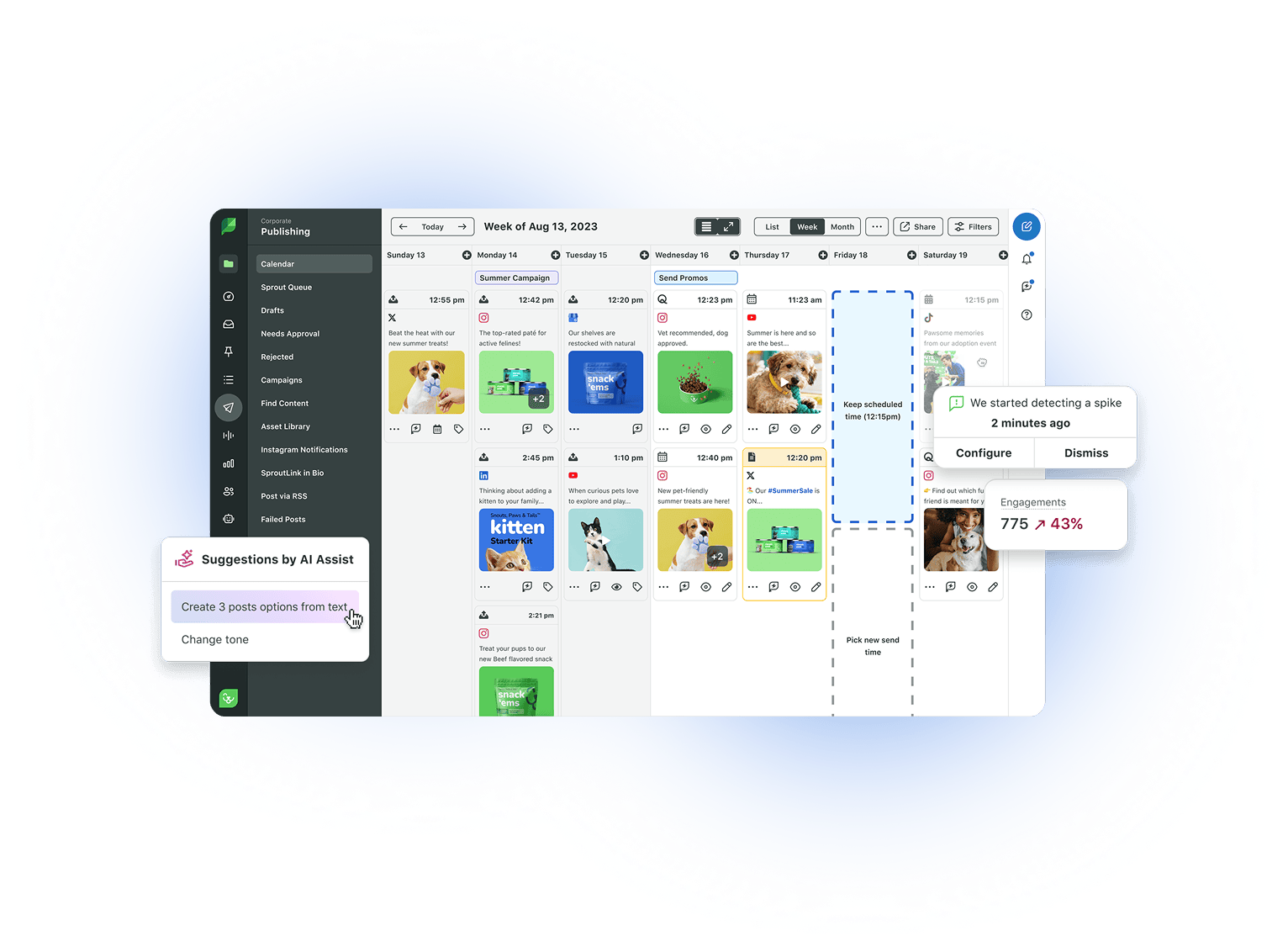
Brands can create engaging, positive content using Sprout Social’s intuitive platform. When you create meaningful content backed by deep insights, your audience gets a healthier feed.
Learn how to deliver smarter, faster business impact and create more meaningful social media content with Sprout Social.
39 free social media strategy templates that will elevate your workflows

Aufbau und Ausbau stärkerer Beziehungen in sozialen Medien