The complete guide to social media community management

Written by Sam Kendall
Published on April 22, 2026
Reading time 19 minutes

Table of Contents
Social media has always been the home of thriving niche communities, but it’s never been more important for brands to nurture these spaces. According to Sprout’s The State of Social Media Report, community-focused content is the second most-desired content type from users today, while 51% expect brands to more actively engage with their audiences on all platforms.
Social media community management represents a unique opportunity for brands, but it does come with hurdles. Where more traditional types of community management (like hosting events or handling customer service complaints) allow brands control, on social, you must adapt to the engagement standards of each community and social network.
That means working across different platforms, managing multiple conversations at once and staying up-to-date on network updates and trends. In today’s new social media landscape, engagement is just as (if not even more) important as entertainment. Active social media communities build hype around a brand, providing organic amplification for launches and promotional activities.
In this article, we share how you can create more impactful audience experiences through community management on social media.
What is social media community management?
Social media community management is the process of engaging audiences across social media networks to increase brand loyalty and grow authentic connections. This function oversees the one-to-one or one-to-few interactions that strengthen relationships and promote brand advocacy.
Nearly every social media network—Facebook, Instagram, X (formerly known as Twitter), LinkedIn, Twitch, Reddit, Threads—has features that support creating and maintaining active communities. A social media community management strategy defines the cross-network approach a business takes when managing conversations with brand advocates.
That said, not all communities are created equal. You should refine tactics based on where your community lives to yield the best results.
What is a social media community manager?
Social media community managers are responsible for engaging audiences across networks to further develop a community. At a high level, this may sound like a social media manager’s responsibility, but there are distinct differences that separate the two roles.
For example, you might’ve seen Oatly’s former Social Engagement & Community Growth Specialist, Paula Perez, in an Oatly TikTok from time to time. However, she wasn’t part of content planning.
“I’ll star in a TikTok on occasion because I’m comfortable in front of a camera, but I don’t plan or create any of the content that goes on our social media profiles,” Perez told us during a previous interview. “Our creative and social teams work together on that.”
Perez’s comments highlight how important it is for today’s social community managers to think beyond content. What you’re publishing is important, but your key focus should be on how your audience reacts to that content. Focus on audience behaviors, interests and pain points within your specific niche communities and targeted audiences. Then, help your brand react in a valuable way to all of the feedback that relates to these areas. Often this means going deeper into not just your comments, but also DMs and posts on discussion forums.
What are common use cases for social media community management?
The typical day in the life of a social media community manager can vary depending on the brand they work for and the communities they focus on. That said, certain core responsibilities consistently shape their role. These include:
- Customer support: Providing timely and helpful responses to customer inquiries and concerns on social media.
- Audience engagement: Fostering meaningful interactions with followers through content, conversations and campaigns.
- Feedback aggregation: Analyzing customer opinions and insights to inform business decisions.
- Lead generation: Identifying and nurturing potential customers through social media engagement.
- Crisis management: Addressing and mitigating negative situations or PR issues that arise on social media to manage crisis.
- Gathering insights: Collecting and sharing community insights that can inform content strategies and wider business changes.
Why is social media community management so important?
We can’t overstate the role of community management in social media. It’s a unique discipline—separate from creative production or content strategy—that can create value for any and all brands across networks. When done well, it becomes a powerful tool for boosting brand perception. Here’s how:
It increases brand visibility
Social media algorithms are notoriously mysterious, and what works today may not work tomorrow.
Building an active community is the best way to grow your reach when the algorithm works in your favor, and to maintain it when it doesn’t. Actively participating in conversations on social media pushes your brand past the boundaries of your owned profile, introducing it to new potential fans.
Perez says these efforts helped establish and build Oatly’s brand presence across the social media landscape. “Whenever I tell people I work at Oatly, they always tell me they see our page in comments sections all over the place.”
It provides insight into audience preferences
A social media community is a goldmine of audience insights that can be turned into actionable social intelligence. By tapping into sentiments, pain points and preferences, you can make informed decisions about product development, marketing strategies and overall business direction.
For example, Salesforce aggregates data and audience feedback using Sprout Social to learn more about their audience preferences. According to Max Benesi, Salesforce’s Associate Manager, Social Media and Community, it’s one of the best ways to tap into the expertise of their community of highly engaged Trailblazers—brand advocates who are committed to innovating with Salesforce.
“They’re very honest—they will tell us what they like and don’t like,” Benesi said. “We use their feedback to inform our content creation.”
Bonus Resource: Discover how Salesforce 10x’d their community management efficiency (and how you can too!)
It protects and enhances brand reputation
Your social media accounts now have a crucial role to play in improving and preserving your brand’s reputation, both online and off. According to the Sprout Social Q3 2025 Pulse Survey, 52% of Gen Z are now more likely to trust information about brands or products on social media when compared with traditional search engines (like Google) and AI chatbot searches.
By investing in community management and prioritizing timely, personalized interactions, brands can cultivate trust and turn their social media presence into a powerful engine for growth and advocacy.
It strengthens customer relationships
One-on-one interactions in a community setting can have a ripple effect, strengthening customer relationships far beyond the initial exchange. Remember: For every one person who voices a question, there are probably quite a few individuals who have the same question but haven’t spoken up.
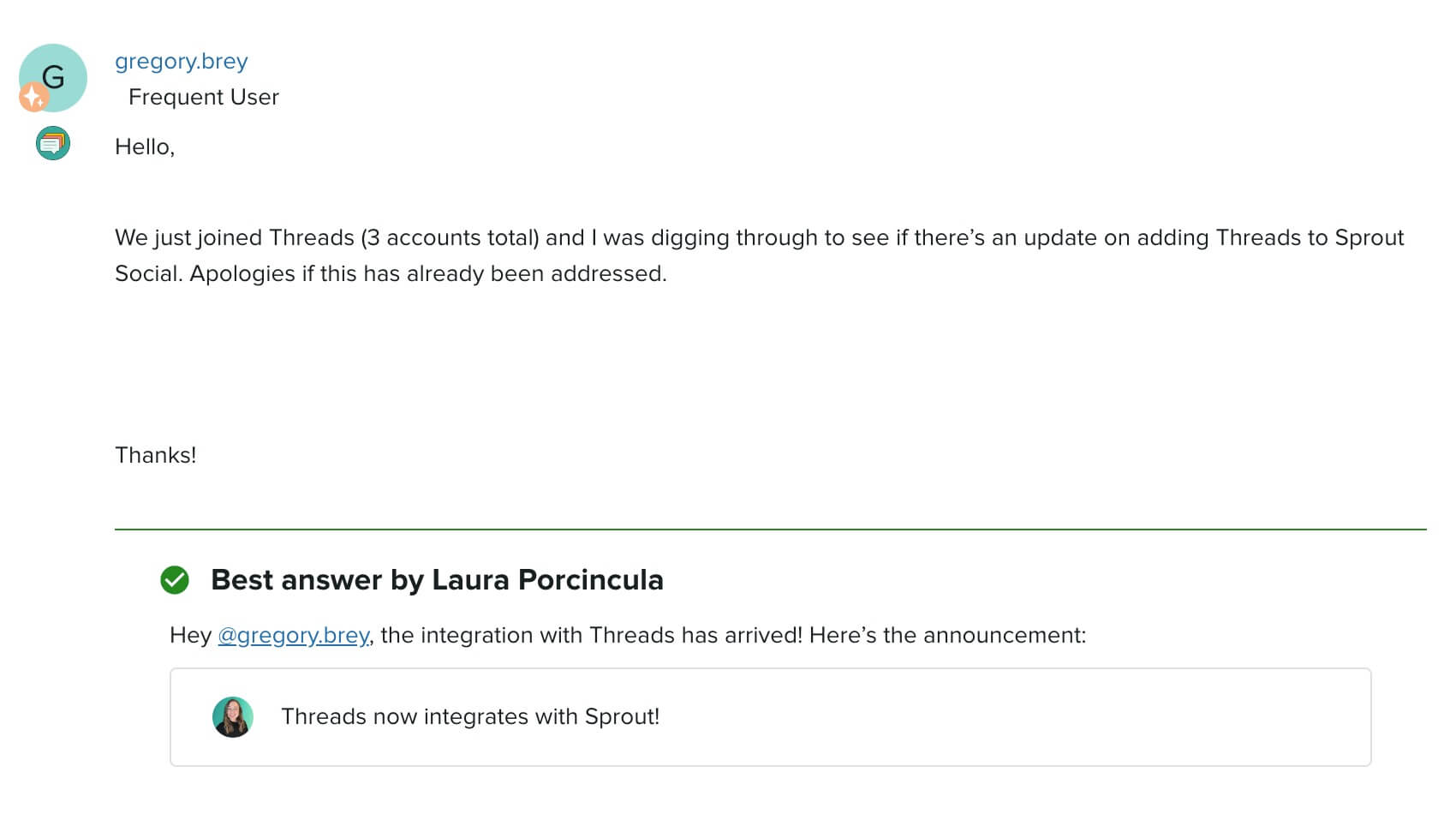
In Sprout’s owned community, The Arboretum, we created a designated space for platform questions and feedback. No question is too big or small, and we work with our team of experts to ensure each customer is addressed in a timely fashion. These efforts create a bi-directional feedback loop that builds relationships with our users at scale.
It surfaces rich, unfiltered customer intelligence
Customer social insights represent detailed information related to your followers’ needs, desires and expectations from your brand overall and your presence on social media. Building a community is the most reliable way to receive this unfiltered feedback.
You can receive customer intelligence from accounts you’re managing yourself. But it’s also worth tracking and reacting to communities outside of your direct control, like conversations across Reddit. By building a Reddit marketing strategy, you can increase the reach of your community engagement and manage more conversations about your brand. Here’s an example of a Reddit thread that running shoe brands should be tracking, because users are discussing their favorite brands and products.
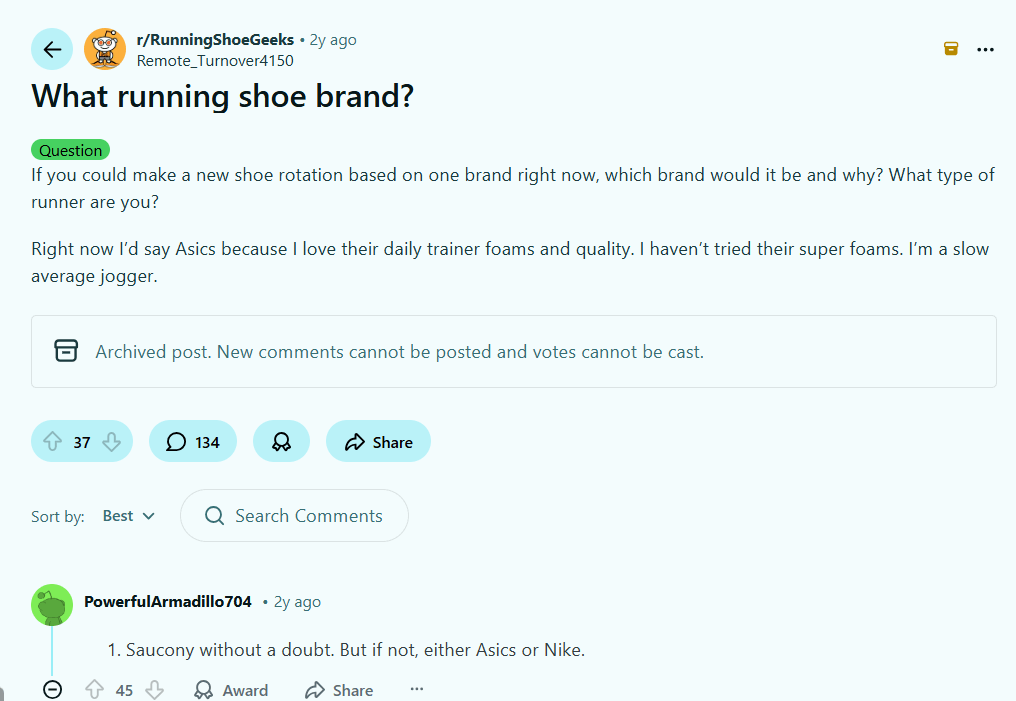
Keeping connected to your communities across all socials will reveal similar conversations about your brand and its competition. You’ll also gain more detailed insights to inform changes in how your business markets itself and provides value by engaging and nurturing these conversations.
It boosts discoverability across search engines and AI
Alongside boosting your brand’s visibility on social platforms, community management also helps your brand get noticed through search engines and AI search. Reddit is just as important here, particularly for AI search visibility; Reddit is currently the most-cited domain for AI when generating answers.
The more your community engages and promotes your brand online, the more likely you are to show up through these search methods. This means, over time, your focus on social community management will transform how your brand is discovered online. This increased discoverability can lead to more people joining communities, allowing your brand’s presence to grow even further.
How to build a social media community management strategy
Effective social media community management may appear effortless, but it’s a carefully cultivated skill. Behind every well-crafted response lies a community-focused strategy honed to build relationships and drive results.
We’ve outlined the following six steps to help you elevate your brand’s social community management efforts.
1. Set goals and success metrics
Setting effective goals for your social media community management strategy requires striking the right balance between ambition and realism. Begin by grounding your objectives in the broader business goals, whether it’s boosting brand awareness, driving conversions or fostering customer loyalty.
Your success metrics should link directly to these goals. Set clear, trackable social media KPIs to monitor how effectively you’re working towards each goal. For example, if your goal is to foster customer loyalty, you may want to prioritize increasing positive brand sentiment.
On the other hand, if you want to drive conversions, consider setting a target for proactive engagements on product-related content to drive potential customers further down the sales funnel. The better your goals and success metrics align, the easier it will be to refine and improve your community management strategy over time.
2. Identify your target audience & where they’re most active
The best way to learn about your audience is to listen and learn from how existing communities are behaving. Look at important communities across both your brand and your industry, and use a social listening tool to identify who they are and what they expect from brands on social.
To further expand your social community management strategy, begin by identifying where your target audience is most engaged. This focused approach allows you to tailor your content and voice to resonate with them, maximizing reach and fostering authentic relationships.
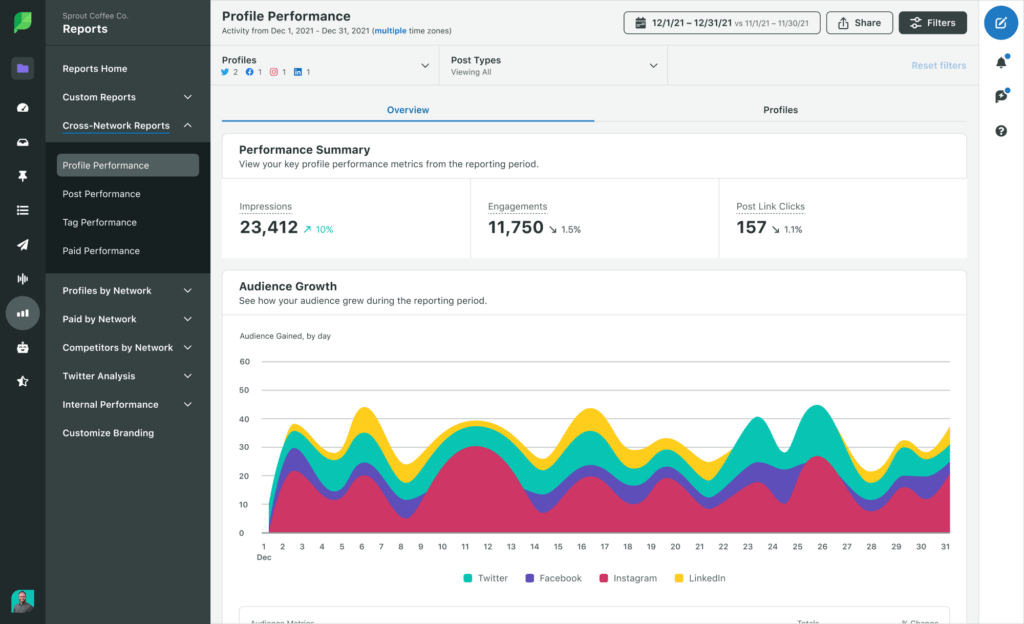
Remember, quality trumps quantity. Don’t overextend your resources by trying to be everywhere at once. Use a social media management tool (like Sprout) to pinpoint the platforms generating the highest engagement, and prioritize your efforts there. A key part of effective community management is first understanding the specific group you’re trying to engage, which involves knowing how to find your niche on social media.
This data-driven approach ensures you’re investing your time and energy where it matters most. You’ll reap more benefits from your strategy by honing in on the audiences that align with your target personas and are ready to engage with your brand.
3. Build clear workflows and ownership
Once you’ve determined which audiences you’re speaking to, you need to decide who is responsible for speaking to them. Your social media community manager should be the first port of call and lead authority on all engagement efforts. But depending on the size of your team, you might need to build in more hierarchies.
Regardless of your team size, community management demands a strict workflow. Create a messaging strategy for responses to your community. This should include brand voice considerations, when to pass commenters onto customer support and an ideal timescale for responses to direct mentions or messages.
Once you’ve outlined your workflow, share it with everyone in your comms, marketing and customer support teams. It’s also worth discussing this workflow with senior leadership, to make sure your efforts are aligned with your brand’s overarching objectives.
4. Actively engage and foster relationships
Start with actively responding to members of your existing community, across your comments, DMs, Reddit forums and other spaces. Remember that every time you respond to your community, you’re speaking one-on-one with an individual and simultaneously speaking to the entire community.
All of your community engagement efforts should aim to foster stronger relationships. This might be through sharing upcoming events they’d be interested in, solving a problem, escalating to customer support or reacting to a piece of user-generated content. In all cases, follow your workflows and track the behaviors that stem from the interaction.
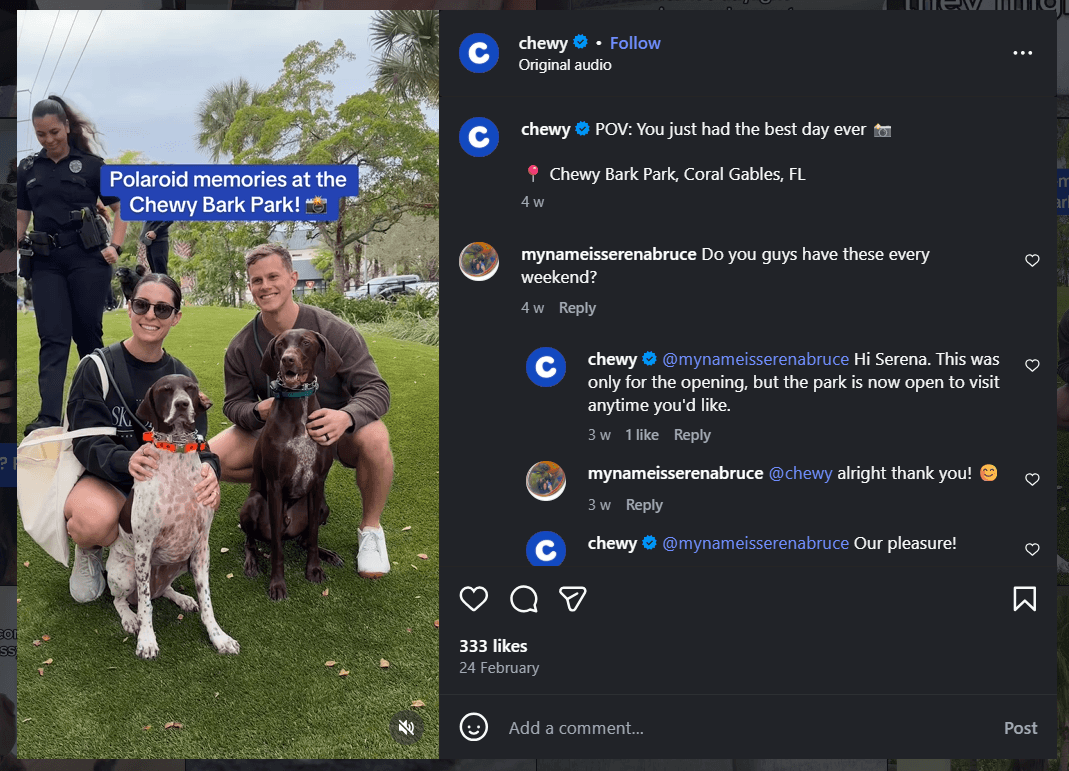
Here’s an example from Chewy, who answered a commenter’s question, then replied to the comment thread again to further support them. They were able to answer the question in a positive way, then further show they’re a brand that listens and engages with its community.
5. Establish a social media moderation strategy
Once you’re engaging, take your workflows further by building in a moderation strategy. Establishing a clear moderation strategy is like setting the ground rules for a great party—it ensures everyone feels safe, respected and has a good time. By proactively addressing negativity and promoting positive interactions across your community, you’ll cultivate a thriving space where your brand can shine.
If you haven’t yet defined your social media moderation approach, consider these key aspects:
- Brand voice and community culture: What kind of environment do you want to foster? Do you want to position your brand as a helpful expert, a playful companion or something else entirely? Your moderation style should align with your brand’s voice and the desired community culture.
- Response protocols: How will you handle negative feedback or customer complaints? Establish clear processes for timely and empathetic responses.
- Crisis management: Develop a plan for dealing with trolls, inflammatory comments or potential PR crises. Define escalation paths and empower your team to take action when necessary.
Remember, moderation isn’t just about policing; it’s about fostering an environment where genuine connections flourish. By establishing clear guidelines and consistently enforcing them, you protect your brand’s reputation while empowering your audience to engage in meaningful conversations.
To maintain a healthy digital ecosystem, consider using social media moderation tools that filter spam and route urgent community messages automatically.
6. Measure your results and optimize
Measuring your community management efforts isn’t just about creating reports; it’s about proving value and securing buy-in from marketing leadership. By tracking key metrics like engagement rate, sentiment analysis and conversions, you can directly tie your work to broader business goals.
But the true power of data lies in its ability to refine your strategy. Analyze audience behavior to gain insight into their content, engagement and product preferences. From there, brainstorm ways to make improvements. This social intelligence ensures your strategy remains effective and evolves alongside your audience’s needs and your brand’s objectives.
8 social media community management best practices and tips
Now that you’ve started to develop your social media community management strategy, it’s time to optimize it. It’s worth noting that it takes more than just a few likes and comments to create lifetime fans.
Use these eight tactics to get the most out of your social media community management strategy over time.
1. Reward your superfans
As you grow your social media community, you’ll begin to notice some friendly faces. These are budding brand evangelists. Getting them to that stage requires thoughtful engagement.
The first step is identifying your superfans. Look for people who drive community conversations forward by engaging with your social content: it might be mods on Reddit, or maybe they’re the first to comment on posts in your Facebook Group. These superfans might also be content creators or influencers who could become the perfect collaborators for your brand in the future.
Once you’ve found your superfans, show them your appreciation. Sprout’s community team knows that even the simplest gifts can be a major relationship builder.
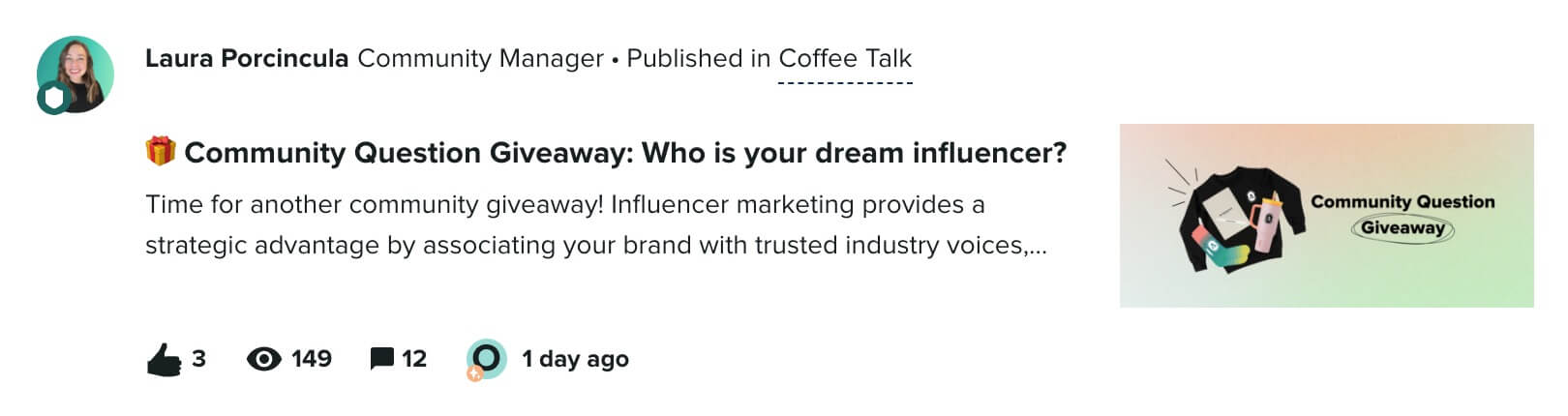
“Our community doesn’t owe us anything—it’s on us to keep members who are willing to participate engaged,” Jonathan Zuluaga, Sprout’s former Senior Community Strategist, notes. “We always reward people for their effort to show we appreciate the value of their time.”
2. Prioritize speed without sacrificing quality
Timely responses matter when you’re responding to your community; nobody wants to be left unread for weeks at a time. But equally, you shouldn’t be rushing to reply to all of your messages. It’s just as important to make sure you’re responding in spaces where your messages can make the most impact, and that you’re using the right tone and speaking with clarity when you do so.
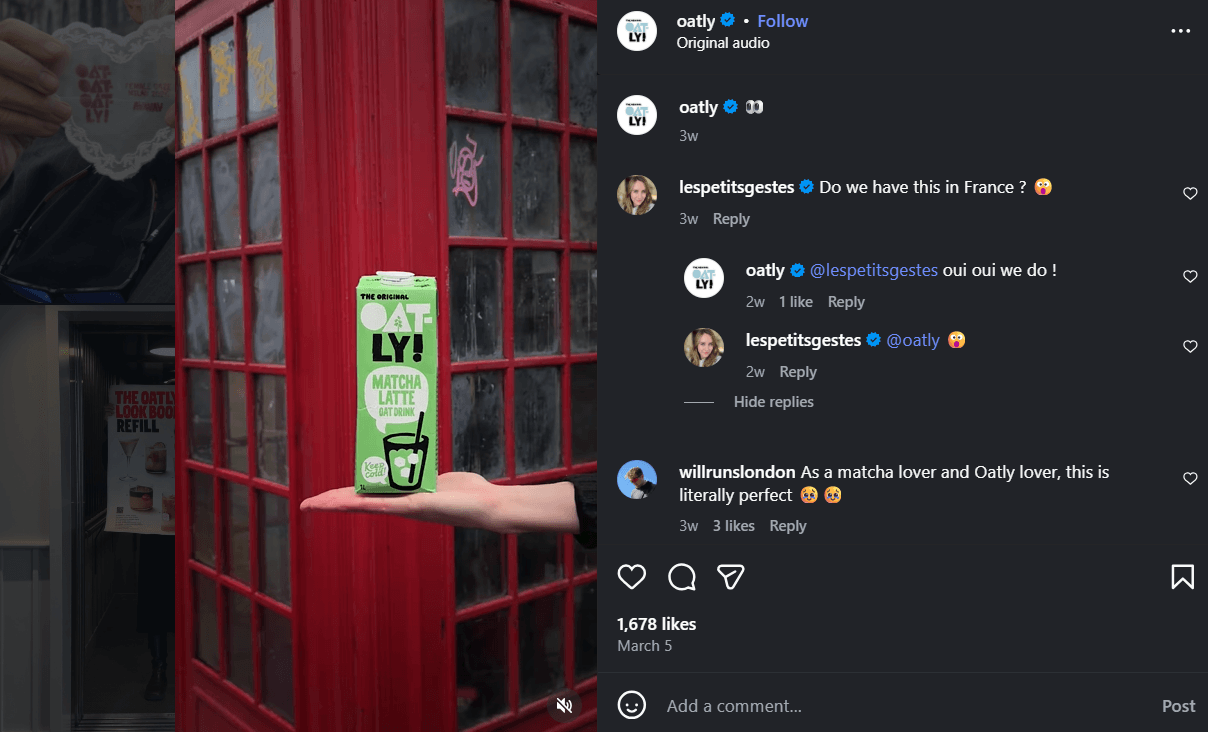
Oatly’s figured out how to marry their responses times with a playful approach when engaging with its audience:
Build the speed of your responses into your community management workflows. Determine a response time that works for the size of your management team, and how active your brand is on socials. Try to stick to it where possible, but remember it’s okay to be a bit late as long as you’re reacting to your community in the right way.
3. Prepare to answer difficult questions
Not every message you receive from your community members will be a positive one. Just like their approach to speed, Oatly found a way to cope with some of the more difficult questions their accounts receive.
“We try to be really responsive, no matter what,” says Perez. “We even have some fun with people who give us criticism. We know we won’t convince that person to love Oatly, but there’s also a chance someone else might see our response and think it’s funny.”
Maintaining this responsiveness means prepping your team to answer the hard questions. At Oatly, this looks like regular knowledge shares on issues relevant to their product and mission. “We get a lot of questions about niche ingredients, packaging, our commitment to sustainability—we’re given the resources needed to speak on all of it.”
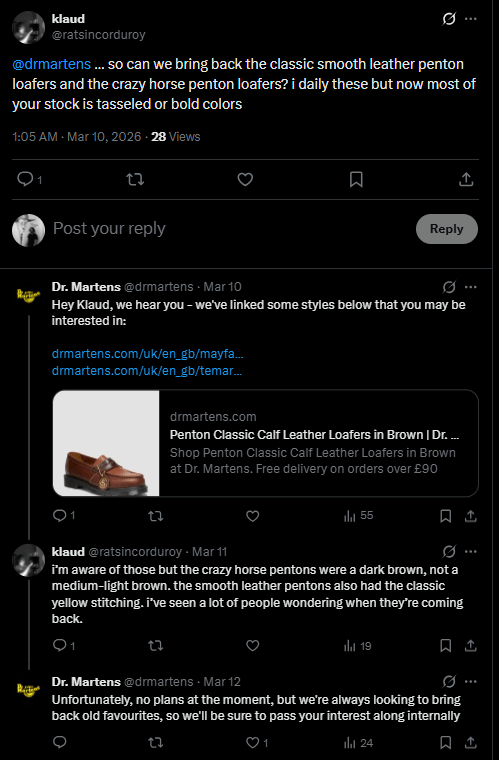
Here’s another example from shoe brand Dr. Martens on X, where a user has asked them to bring back a certain product. Dr Martens first suggests similar products, then makes sure to continue the conversation to inform their customer that they’ve passed their suggestion onto the internal product team.
Just like in real life, the best way to tackle concerns or outright negativity on your socials is to treat people with respect. Listen to what they have to say, and engage with them as best you can.
Finally, learn when it’s best not to engage; some troll messages and comments simply won’t be worth the time and energy. Focus on the members of your community who have genuine questions or are actively interested in hearing from you, rather than just looking for a reaction.
4. Create clear escalation paths
You need to design your escalation paths before a negative interaction goes too far, rather than scrambling when it happens. This isn’t just important for crisis situations; being able to escalate is a vital part of customer care. It means you can refer your community to the right places and keep everyone satisfied, regardless of their query.
Determine when you should typically escalate a situation to customer support, such as if a commenter is having a real issue that your marketing team can’t solve. Create similar processes for looping in legal and/or PR in situations where your brand is being seriously impacted by engagements. This is never enjoyable, but having clear processes in place means creating early alignment across teams to avoid disconnected responses. This also means you’re better equipped to respond quickly to more serious situations.
For the most sensitive situations, make sure you have a detailed crisis management strategy in place. Having a plan ready will allow you to keep your community informed as your brand navigates any significant challenges. Your response can be improved by leveraging the right tools. Use Sprout Listening to monitor sentiments and conversations across each platform, and then take action immediately.
Sprout also offers customer care support tools for Reddit. With Sprout’s Reddit capabilities, you can create specific escalation pathways for Reddit threads. By setting queries, you can identify when your brand has been featured on Reddit, then follow the right escalation path depending on the sentiment behind the thread. Doing so expands your customer service potential, and means you can answer customer questions even beyond your owned accounts.
5. Prioritize proactive engagement
Brands should strive for balance between the reactive and proactive elements of their social media community management strategy. One reinforces the strength of the community, and the other grows it in size.
Identify ways in which your brand can join in with conversations in other spaces. These might be situations where you can spotlight your community or react to campaigns by other leading brands. Here’s an example where multiple brands have engaged with KFC’s star sign content.
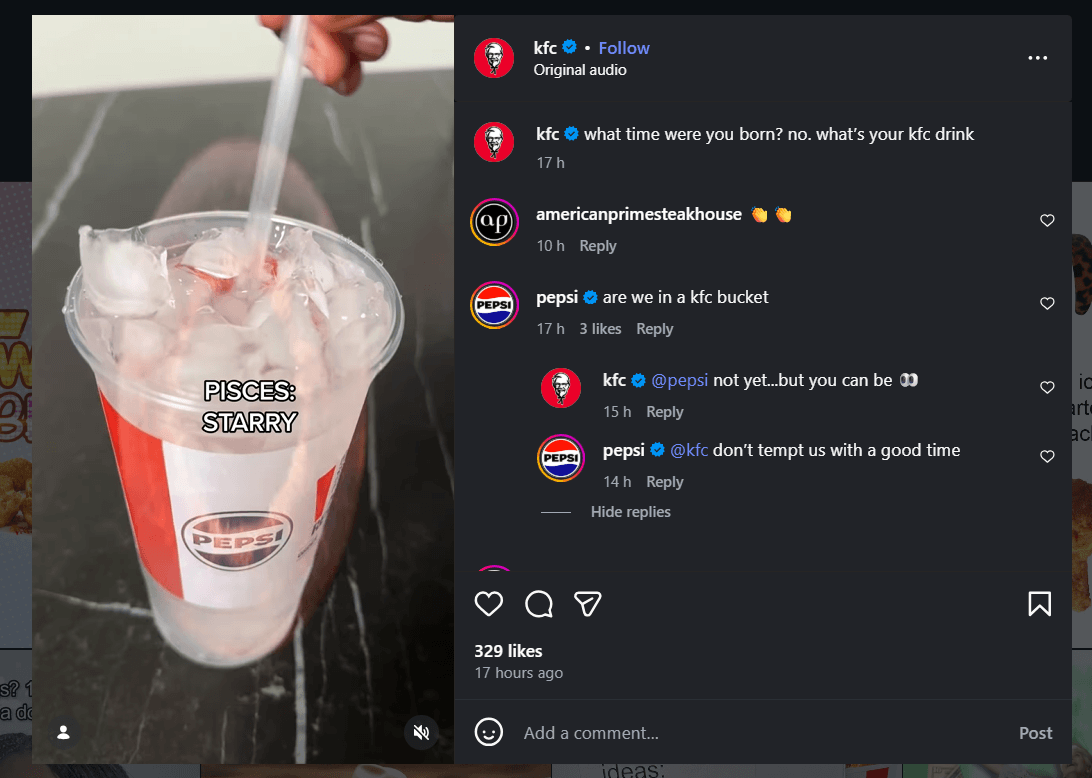
This style of proactive marketing—an audience engagement strategy that uses conversations around brands or industries that don’t explicitly mention a brand handle—is a masterful way to increase reach and expand your community. A top comment on a viral post gets a healthy fraction of all those impressions.
Remember to choose these opportunities carefully. Jumping onto trends too often or choosing irrelevant ones can end up having a negative impact, so always respond to conversations that best speak to your brand’s values.
6. Maintain a consistent brand voice
Any time you engage with your community, you should be adopting the same style and cadence. This is what’s known as your brand voice, and it should be backed up by a comprehensive strategy that supports who your brand is and what your values are.
Your comments and replies shouldn’t feel like they’re coming from individual team members, unless they’re handling a customer support query. On socials, your comments should come from the brand, and feel like they’re something your brand’s persona would naturally say. This can be a challenge to get right, but the benefits of defining and managing a distinct brand identity translate to a more consistent experience for your community.
Document clear guidelines for your community responses so that all team members know what type of message to reply with. The more substantial these guidelines are, the easier it’ll be for everyone to be on the same page.
7. Establish a content creation feedback loop
Social media community managers might not be directly responsible for content creation, but their role is integral to a successful content strategy.
By closely collaborating with the creative team, community managers can provide invaluable insights gleaned from their interactions with the audience. This includes identifying trends, potential brand advocates and opportunities for engagement, helping shape content that resonates with the target audience.
This symbiotic relationship fosters a cohesive brand experience for the community, where the creative vision aligns seamlessly with the real-time conversations happening on social media. When creative teams, community and social media managers are aligned, the result is a more consistent brand experience for the fans on the other end of the message.
Here’s an example from leading Japanese entertainment property Evangelion, who listened to their community responses and chose to publish a new piece of media directly on YouTube.

8. Empower your team with the right management tool
Simplify your social community management efforts by investing in the right tool. Sprout Social enables your community managers to learn from and connect with communities from a single interface. With features like Smart Inbox, you can keep track of your overflowing social inboxes across networks, affording your team the time to carefully respond to your community and loyal customers. You’ll also be able to deliver superior customer care by responding faster on socials, with more detailed information to draw from when drafting replies.
With Sprout’s Reddit functionality, you can apply this process to the ultimate community: subreddits. Sprout’s Reddit API enables you to post directly to Reddit, opening the door to many more community management opportunities across arguably the most important communication platform available today.
Community management on Reddit isn’t just about building existing relationships; it’s about creating brand awareness and making your brand discoverable. Thanks to their Google partnership, subreddits are one of the most indexed sources for traditional searches and AI searches. By posting on Reddit, and managing conversations across it, your brand becomes more visible beyond your social platforms.
Sprout Listening’s Reddit query customization tool also enables social teams to target specific subreddits that matter most to their brand. With effective targeting, larger brands can access detailed insights from Reddit, related to wider PR, product suggestions, frequent customer care questions and more. By tracking and adapting to this data regularly, brands can better understand their audience and use these insights to further boost the quality of customer engagements.
The right social management tool also gives your team access to cleaner data and faster insights, freeing up your time to focus on refining responses and building authentic connections with your community.
3 social media community management examples from real brands
Thriving brand communities bring people together over a shared connection to a company’s mission, vision or goals. Learn how to translate your business needs into a thriving fan base with these three social media community management examples:
1. Oatly
We’ve mentioned Oatly a couple of times already because they’ve mastered the art of building communities across their social accounts. A recent example of this is the launch of their new Oatly Matcha product. In a webinar with Sprout, Perez shared that it was a direct result of Oatly engaging with and listening to its community.
“That’s kind of the insight that we had after seeing matcha explode at cafes. Also, we were following a lot of matcha influencers. We stay really close to our product teams. Almost every time we get a request it goes to them in some way. So we do track everything that comes in. And at a certain point, this trend just became way too big to ignore. Ever since we came out with this product, we’ve also seen it exploding on socials because it was something that people were asking for.”
Oatly now continues to effectively promote their new Oatly Matcha drink to their audience on socials, and listens to feedback in the hopes of uncovering yet more opportunities for new products.

2. Among Us
The video game Among Us became extremely popular during the COVID pandemic, and community engagement has been a core strategy in maintaining that popularity in the years since. Victoria Tran works as the game’s Community Manager, and explained how important her X strategy is to the growth of the brand.
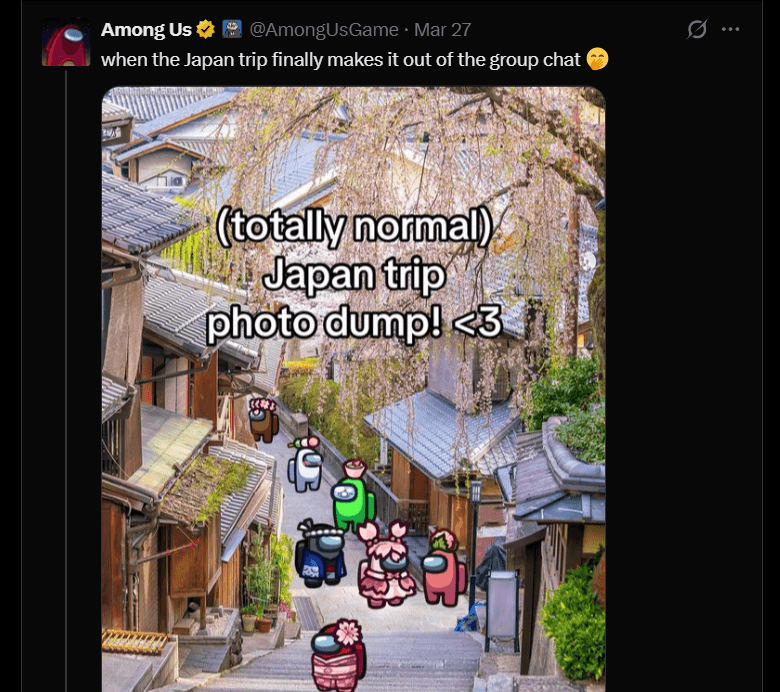
Tran set four goals when taking over the X community; redirect attention towards this account, put the community center stage, focus on retention over growth and foster a welcoming environment. Through her work, Tran speaks to an engaged community of over 1.5 million X followers which has helped the Among Us game to sustain thousands of players every month over seven years after its original release.
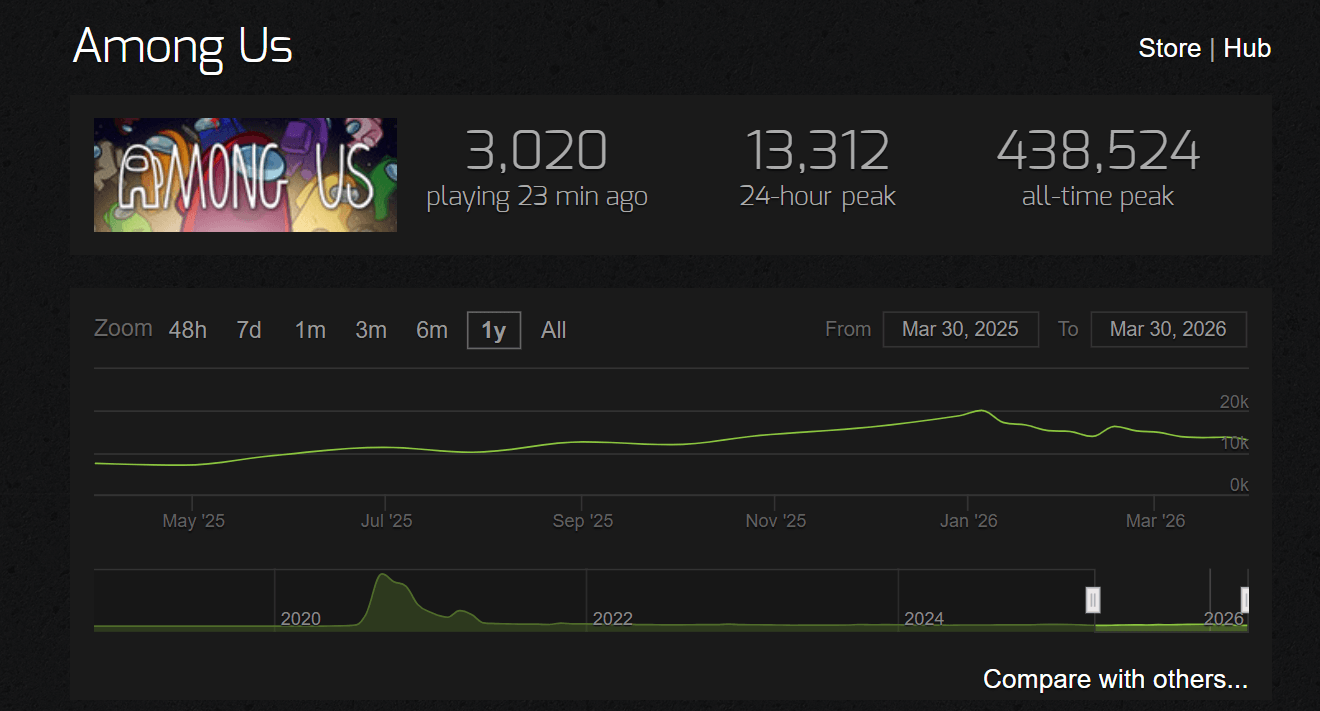
It’s an example of just how important it is for brands to create social spaces for their fans, and then continue to put the work into maintaining those spaces. By focusing on their community, Among Us has built a loyal base of customers who sustain the brand’s continued successes and remain engaged with them online.
3. Lucky Charms
At the start of our tips and tricks section, we focused on the importance of superfans. This example shows how beneficial it can be to find, contact and partner with these superfans in your content efforts.
Breakfast cereal Lucky Charms collaborated with Olympic gold medalist Alysa Liu on a giveaway campaign, which originated because of the athlete’s appreciation for the brand; she continues to use Lucky Charms marshmallows as her social media profile photo.
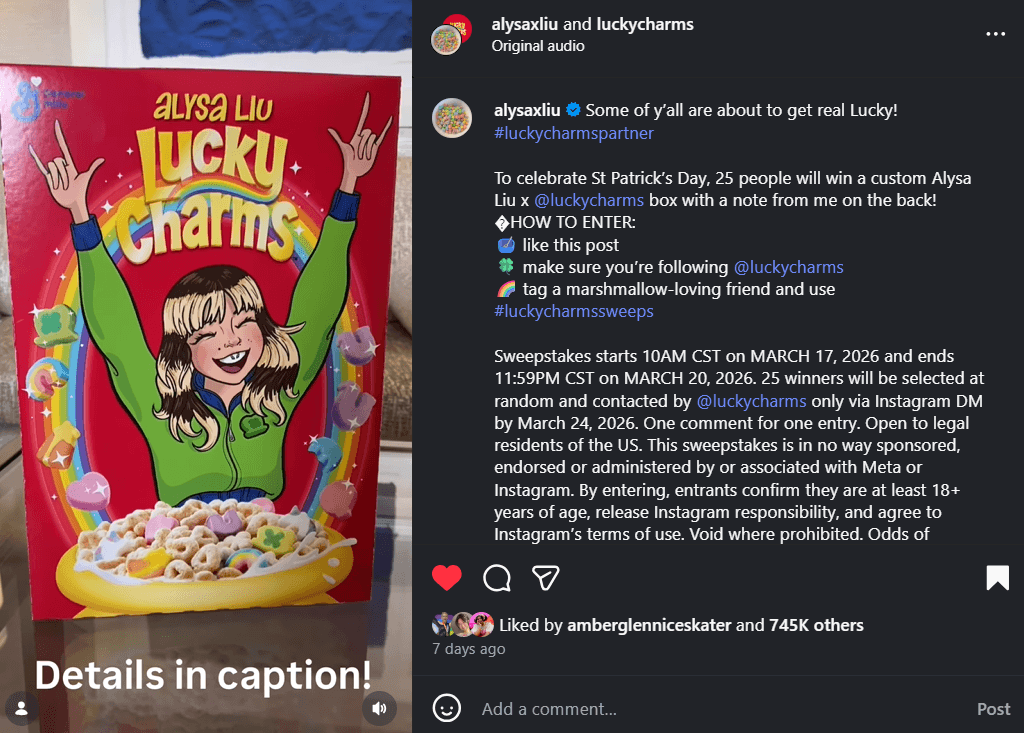
By empowering their influential superfan, Lucky Charms created a timely social media campaign that spoke to the athlete’s fans and their own community. They understood what their community wanted to see, and encouraged engagement on the campaign through likes, followers and a campaign hashtag.
The campaign received almost 750k likes, a sign of being well-received by their community. It shows the importance of using community interests to inform content opportunities, and making sure that your social strategy is guided by your community as much as possible.
Strengthen your social media community management strategy
As these successful examples show, a solid approach to social media community management can bolster organic reach, create brand ambassadors and further cement your brand’s personality in an authentic, human way. As the role of social spaces like Reddit continue to grow, it’s more important than ever for brands to develop and maintain a community management strategy.
To create authentic audience connections that strengthen your brand on socials, check out this guide to building a solid community management strategy. It’s filled with practical examples that’ll show you how to put everything you just read into action.


Share